
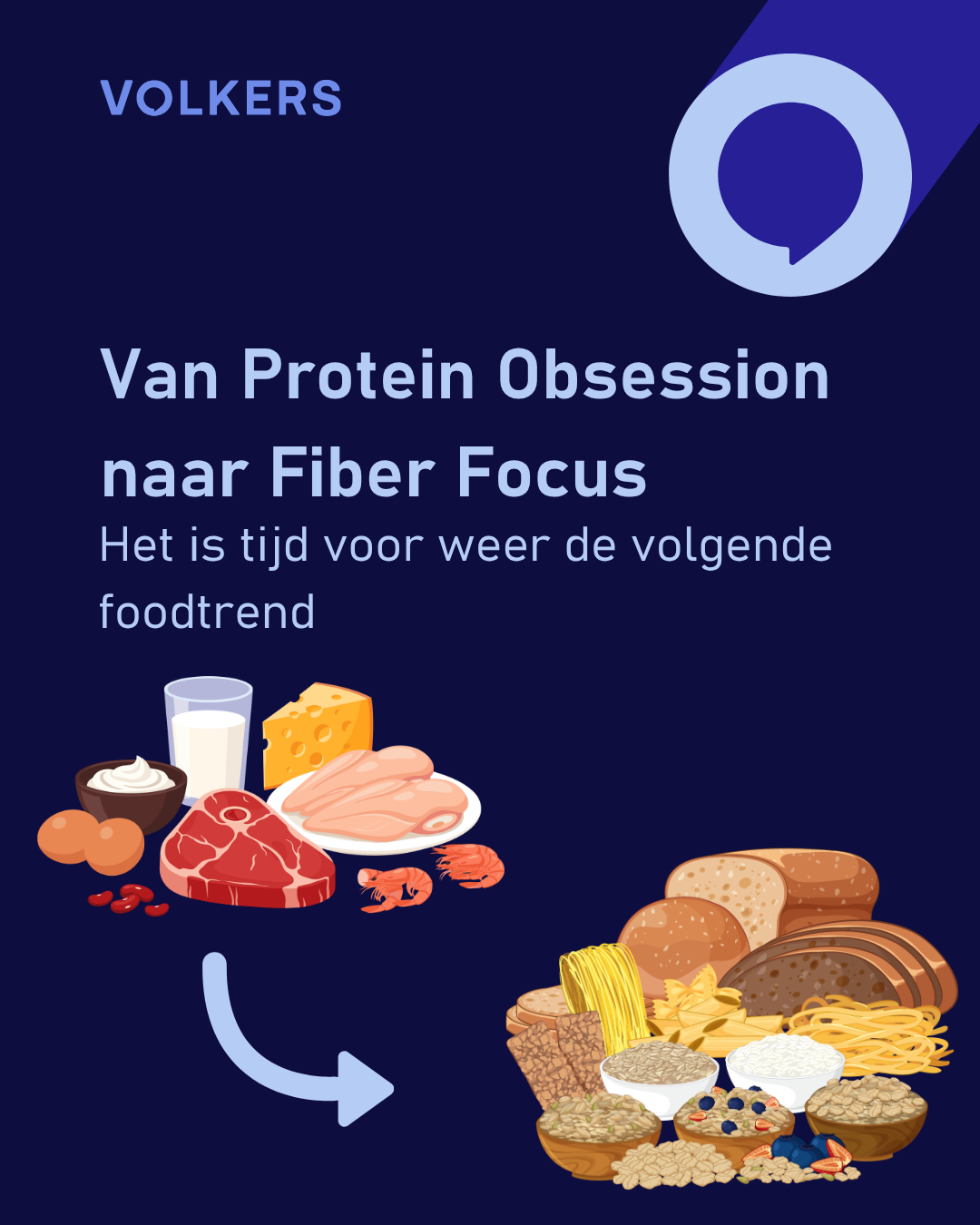
For years, everything revolved around protein. From protein shakes to high-protein snacks and "high protein" labels on almost every shelf. But in 2026, we are seeing a clear shift. The spotlight is moving from protein to fiber.
And that is not hype without reason.
In recent years, protein has been firmly positioned as the essential building block for a healthy body. And successfully so. In fact, most people in the Netherlands now get more than enough protein through their daily diet.
Where there is still room for improvement is fiber. The average person in the Netherlands consistently consumes too little fiber. This is partly due to the shift toward processed foods, fewer whole-grain products, and a lower consumption of vegetables and legumes.
Fiber plays an important role in:
Yet, fiber often remains overlooked in nutritional choices and marketing, even though this is exactly where significant health gains can be made.
The shift we are seeing now is logical. Consumers are becoming more conscious and are looking beyond just protein. They are seeking genuine health rather than quick claims.
You can see this in:
A focus on fiber is therefore not a hype, but a correction to the one-sided focus of recent years.
The rise of fiber as a trend is driven by several factors. Think of the increasing attention to gut health, scientific insights, and a more critical consumer.
In addition, sustainability and plant-based nutrition also play a role. Many fiber-rich products, such as beans and grains, align well with these developments.
For food brands, there is a clear opportunity here. While protein has been the primary marketing hook for years, there is now room for a new narrative.
But that requires a different approach:
This is where packaging and design come in. How do you make fiber attractive, understandable, and relevant to the consumer?
Consider:
2026 looks like the year in which fiber finally gets the attention it deserves. Not as a hype, but as an essential part of a healthy diet.
The question, therefore, is not whether fiber is important.
The question is who can best translate it for the consumer.
The shift from protein to fiber requires more than just a different claim. It calls for clear communication, strong visual choices, and packaging that strikes the right chord with the consumer.
Want to know how to translate this trend into your brand and packaging?
We’re happy to help you think it through, from strategy and design to production.
Feel free to get in touch or schedule an introductory meeting.